
Fitness and Longevity: How Much Exercise You Really Need to Live Longer
Physical activity is the closest thing we have to a longevity drug — and the effective dose is more achievable than you think. Here's what the evidence says about aerobic work, strength, and steps, and how to build a routine that actually lasts.
If a single intervention could lower your risk of heart disease, type 2 diabetes, several cancers, depression, and early death — while also improving your sleep, mood, and energy tomorrow — you would expect it to be prescribed relentlessly. It exists, it is free, and it is called physical activity. The gap between how powerful exercise is and how little most people do is one of the largest in all of health.
This article lays out what the evidence actually says about movement and a long, healthy life, how much and what kind you need, and — the part most guides skip — how to make it stick by tracking it as a habit rather than relying on motivation. The goal is a routine you can keep for decades, not a program you abandon in February.

Movement Is the Closest Thing We Have to a Longevity Drug
The evidence linking physical activity to a longer, healthier life is among the most robust in medicine. A landmark analysis estimated that physical inactivity causes a substantial share of the world’s major non-communicable diseases — coronary heart disease, type 2 diabetes, and breast and colon cancers — and is responsible for a meaningful fraction of all deaths globally.
Lee, I.M. et al. (2012). “Effect of physical inactivity on major non-communicable diseases worldwide: an analysis of burden of disease and life expectancy.” The Lancet, 380(9838), 219–229.
The effect is dose-dependent but front-loaded: the biggest jump in benefit comes from moving from doing nothing to doing something. You do not have to become an athlete. Going from sedentary to modestly active buys more health than going from active to very active — which is encouraging news if you are starting from zero.
How Much Exercise You Actually Need

The global guidelines converge on a clear, achievable target. For substantial health benefits, adults should aim for the following each week — and every bit above zero counts, even if you do not hit the full amount.
- 150–300 minutes of moderate aerobic activity (brisk walking, cycling, easy jogging) or 75–150 minutes of vigorous activity per week — or a mix of the two.
- Muscle-strengthening activity on two or more days a week, working the major muscle groups. This is the part most people skip, and it may be the most important for aging well.
- Less sitting, more movement of any intensity. Breaking up long sedentary stretches matters on its own.
World Health Organization (2020). “WHO Guidelines on Physical Activity and Sedentary Behaviour.” Geneva: World Health Organization.
Two findings sharpen the picture. First, strength matters independently of cardio: a meta-analysis found that muscle-strengthening activity was associated with a lower risk of all-cause mortality even in people who did no aerobic exercise. Second, movement can offset the harm of sitting — a large pooled analysis found that roughly 60–75 minutes of moderate-to-vigorous activity a day largely eliminated the elevated mortality risk associated with long sitting hours.
Momma, H. et al. (2022). “Muscle-strengthening activities are associated with lower risk of all-cause, cardiovascular disease, and cancer mortality: a systematic review and meta-analysis.” British Journal of Sports Medicine, 56(13), 755–763.
Steps Count — and You Need Fewer Than You Think
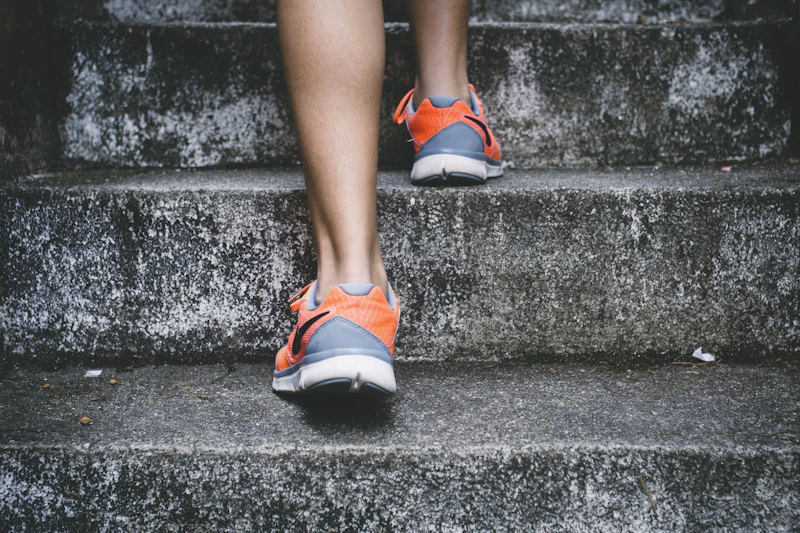
The famous 10,000-step goal was a marketing number, not a scientific one. The real data is more forgiving. In a large study of US adults, mortality risk dropped sharply as daily steps rose from 4,000 toward about 8,000–10,000, after which the benefit plateaued — and, reassuringly, it was the total number of steps that mattered, not how fast you walked them.
Saint-Maurice, P.F. et al. (2020). “Association of Daily Step Count and Step Intensity With Mortality Among US Adults.” JAMA, 323(12), 1151–1160.
The practical takeaway: a daily walk is not a consolation prize. For most people, nudging an average day from 4,000 to 7,000–8,000 steps is one of the highest-return, lowest-barrier changes available.
How to Build a Routine That Survives Real Life
Knowing the targets is the easy part. The reason most exercise plans fail is not ignorance — it is that they depend on motivation, which is unreliable. A durable routine is built like a habit.
- Anchor it to something you already do. Attach movement to an existing cue — a walk right after lunch, mobility while the coffee brews, strength work on the way home from work. Cued behaviours become automatic far faster than free-floating intentions.
- Start smaller than feels satisfying. Two strength sessions a week you actually do beats five you plan and skip. Consistency compounds; ambition that breaks does not.
- Mix the three ingredients. Aerobic work for your heart and endurance, strength work for muscle and bone, and daily walking for baseline activity. Each does something the others cannot.
- Track it, and let the streak pull you. Logging turns a vague intention into a visible record. A chain of completed days is a surprisingly strong motivator — you start not wanting to break it.
Where Tracking Turns Effort Into Progress
Exercise pays off over months, but the feedback that keeps you going has to arrive sooner. That is where tracking earns its place. In Lamplit you log workouts by type, duration, and intensity for free, and with Pro your activity, steps, and workouts sync automatically through Apple HealthKit and Health Connect, so the record builds itself. Streaks and achievement badges make consistency visible and a little addictive — the gamification that turns “I should train” into a chain you do not want to break.
The deeper value is connection. Genie — an AI coach grounded in peer-reviewed research — watches your training alongside your sleep, mood, and recovery, and surfaces plain-language, cited patterns: the training load that precedes your best sleep, the weeks where too many hard sessions quietly wreck your recovery, the walk streak that lifts your mood. Exercise stops being a box to tick and becomes a lever you can see working.
Important Caveats
More is not always better. Adaptation happens during recovery, not during the workout, so training hard every day without rest tends to stall progress and raise injury risk — which is exactly why tracking recovery alongside training matters. If you are new to exercise, returning after a long break, pregnant, or managing a heart condition or other chronic illness, check in with a clinician before starting a vigorous program. And pain that is sharp, one-sided, or persistent is a signal to stop and get it looked at, not to push through.
The Bottom Line
Physical activity is the closest thing we have to a longevity drug, and the dose is achievable: 150–300 minutes of aerobic movement a week, strength work twice, a daily walk, and less sitting. The biggest gains come from simply starting, and the routine that works is the one you can repeat — so build it like a habit, anchor it to your day, and track it so a good week becomes a good year.
Frequently asked questions
How much exercise do I need to live longer?
Guidelines recommend 150-300 minutes of moderate aerobic activity (or 75-150 vigorous) per week, plus muscle-strengthening on two or more days. But the biggest jump in benefit comes from simply moving from doing nothing to doing something, so even a fraction of that target meaningfully lowers your risk.
Is strength training or cardio better for longevity?
You need both, because they do different things. Aerobic exercise builds cardiovascular fitness, while strength training preserves muscle and bone, which protect independence as you age. A meta-analysis found muscle-strengthening was linked to lower mortality even in people who did no cardio, so the ideal routine combines the two.
How many steps a day should I aim for?
The 10,000-step target was a marketing figure, not science. Research shows mortality risk falls sharply as daily steps rise from 4,000 toward about 8,000, after which the benefit plateaus, and total steps matter more than how fast you walk them. For most people, 7,000-8,000 steps is a strong, achievable goal.

Lamplit Team
We're a team of wellness enthusiasts, developers, and researchers building tools to help people live healthier, more intentional lives. Every article we write is grounded in peer-reviewed scientific research.