
Grip Strength: The Hand Test That Predicts How Well You’re Aging
A ninety-second squeeze of a cheap hand dynamometer predicts long-term health better than some of medicine’s favorite numbers. Here’s why grip strength tracks whole-body aging — and how to train the muscle behind it.
Some of the best predictors of long-term health require a laboratory, a treadmill and an hour of your time. One of the very best requires a device the size of a bicycle grip and about ninety seconds: you squeeze it as hard as you can, and read a number in kilograms. Handgrip strength — the maximal force your hand and forearm can produce in a single squeeze — has quietly become one of the most powerful single measurements in aging research. In studies following millions of adults, a weaker grip consistently marks out the people at higher risk of cardiovascular disease, disability and earlier death.
That is not because your forearms hold some secret. Grip strength is a proxy — a fast, cheap and remarkably reliable window on the muscle mass and neuromuscular function of your whole body. And that is exactly what makes it useful rather than frightening: the test costs almost nothing, the number responds to training, and the thing it stands for — total-body strength — can be built at any age. This article walks through the evidence, explains what the number does and does not mean, and turns a sobering statistic into a practical plan.

A Squeeze That Outpredicted Blood Pressure
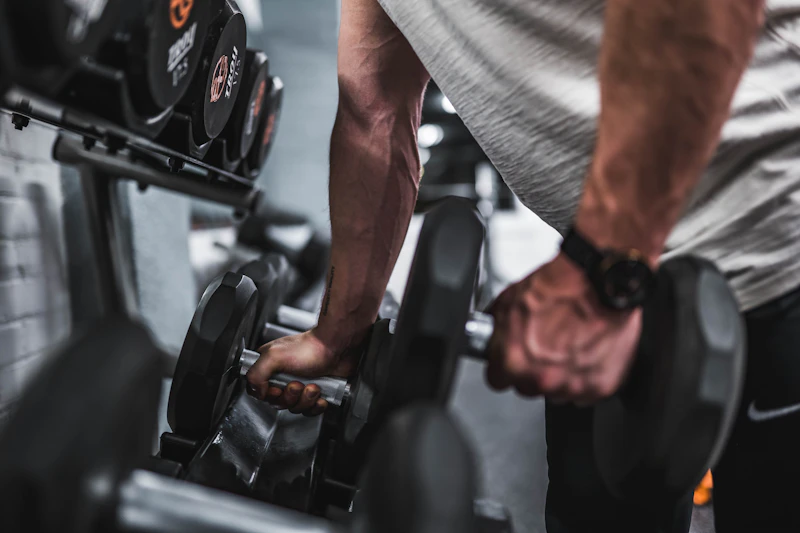
The landmark evidence comes from the Prospective Urban Rural Epidemiology (PURE) study, which measured grip strength in adults across 17 countries and then followed what happened to them over the years that followed. The result was blunt: every 5 kg of lower grip strength was associated with roughly 16% higher all-cause mortality. More striking still, grip strength was a stronger predictor of cardiovascular death than systolic blood pressure — the number your doctor checks at nearly every visit.
Leong, D.P. et al. (2015). “Prognostic value of grip strength: findings from the Prospective Urban Rural Epidemiology (PURE) study.” The Lancet, 386(9990), 266–273.
A result that surprising needs replication, and it got it at extraordinary scale. In the UK Biobank cohort — roughly half a million participants — lower grip strength was associated with higher risks of cardiovascular disease, respiratory disease, cancer and death from any cause. The pattern was not a quirk of one population or one device: weaker grip tracked worse outcomes across a remarkably broad range of diseases.
Celis-Morales, C.A. et al. (2018). “Associations of grip strength with cardiovascular, respiratory, and cancer outcomes and all cause mortality: prospective cohort study of half a million UK Biobank participants.” BMJ, 361, k1651.
It is worth pausing on what makes this remarkable. The classic risk numbers — blood pressure, cholesterol, blood glucose — need equipment, appointments or a needle. A grip test needs none of those, yet in these cohorts it carried comparable or greater prognostic weight for some outcomes. That does not make it a replacement for medical screening; it makes it an unusually accessible early-warning layer that anyone can add at home.
Two things are worth holding onto here. First, these are observational associations, not proof that a weak grip causes disease — more on that below. Second, the size and consistency of the signal across countries and outcomes is exactly what you want from a screening measurement: something simple that reliably sorts higher risk from lower risk, years before symptoms appear.
Why a Hand Test Reads Your Whole Body
When you squeeze a dynamometer, you are not really testing your hand. You are sampling a system: how much muscle tissue you have, how well your nervous system can recruit it, and how much of both you have kept as the years pass. Grip tracks total-body muscle mass and strength closely enough that researchers use it as a stand-in for both — which is why a hand measurement can say something about your heart, your lungs and your odds of living independently at eighty.
The deeper reason the proxy works is that muscle is not just for movement — it behaves like an organ of longevity. It is the body’s largest destination for blood glucose, which ties muscle mass to metabolic health. It is a protein reserve the body draws on during illness, surgery and recovery — reserves matter most precisely when the body is under stress. And it is the machinery that catches a stumble before it becomes a fall, the accident that so often marks a turning point in an older person’s health.
There is a neurological side too. Producing force is a skill of the nervous system as much as a property of muscle tissue: motor neurons have to fire, coordinate and resist fatigue, and their number and connectivity decline with age. Part of what a grip test captures — and part of what strength training preserves — is this neural drive, which is also why strength often improves within weeks of starting to train, before muscle visibly grows.
The muscle-mass side of this story shows up directly in mortality data: in a large sample of older adults, people with more muscle relative to their height had lower mortality over the following years.
Srikanthan, P. & Karlamangla, A.S. (2014). “Muscle Mass Index As a Predictor of Longevity in Older Adults.” The American Journal of Medicine, 127(6), 547–553.
Strength adds predictive information of its own. A meta-analysis pooling data from roughly two million men and women found that higher muscular strength was associated with substantially lower risk of death from any cause. Muscle you can actually produce force with, in other words, is one of the best-documented protective factors in the literature on healthy aging.
García-Hermoso, A. et al. (2018). “Muscular Strength as a Predictor of All-Cause Mortality in an Apparently Healthy Population: A Systematic Review and Meta-Analysis of Data From Approximately 2 Million Men and Women.” Archives of Physical Medicine and Rehabilitation, 99(10), 2100–2113.
What Counts as Strong — and Why Your Trend Beats the Chart
Reference values exist. Research on grip strength has produced norm tables by age and sex, and clinicians use cut-offs derived from them to help identify sarcopenia and frailty — grip has been called an indispensable biomarker for older adults for exactly this reason. If you test yourself and want context, those published norms are the honest comparison point.
Bohannon, R.W. (2019). “Grip Strength: An Indispensable Biomarker For Older Adults.” Clinical Interventions in Aging, 14, 1681–1691.
But charts come with fine print. Devices differ, protocols differ — elbow bent or straight, seated or standing — and any single reading is nudged by time of day, fatigue and motivation. The comparison that carries the most information is not you versus a table; it is you versus you, three months ago, on the same device under the same conditions. A stable or rising trend through your forties, fifties and sixties is a genuinely reassuring signal. A steady decline is an early, actionable warning — visible years before anything shows up as difficulty in daily life.
How to test yourself
The tool is a hand dynamometer — the same class of spring or hydraulic device used in the research, available inexpensively. Keep the setup boring and repeatable: same position each time, elbow held consistently at your side, no swinging or leaning into it. Take three maximal squeezes per hand with a short rest between them, record the best value for each hand, and note the date. Then put the device away for three months. The protocol matters less than the repetition of the same protocol — that is what turns a noisy number into a trend.
Muscle Loss Starts Decades Before You Feel It
Sarcopenia — the age-related loss of muscle mass and strength — does not begin in old age. It begins silently in your thirties and forties, at a rate of roughly 3–8% of muscle mass per decade, and it accelerates after sixty. You do not notice the early decades because everyday life rarely demands anything close to your maximum. The reserve simply shrinks in the background, until one day a threshold task — rising from a low chair, catching yourself on a slippery step — sits uncomfortably close to your limit.
The encouraging part is that this trajectory is unusually modifiable. Resistance training builds strength at every age, including in people who start late in life, and it is the countermeasure with the strongest evidence behind it. You cannot stop your birthdays, but the gap between a trained and an untrained body at any given age is enormous — and which side of that gap you are on is largely a matter of behavior, not genetics.
Waiting is the expensive strategy. Because the decline is slow and compounding, the difference between starting strength training at forty and starting at sixty-five is not just the missed years of gains — it is twenty-five years of un-slowed loss, plus the harder work of building both habit and tissue later. The best time to start was your thirties; the second-best time is this week.
Train the Body, Not the Test
One misreading to avoid: the goal is not to practise squeezing a dynamometer. Gaming a proxy does not change the thing it stands for. Grip strength earns its predictive power as an index of whole-body muscle and neuromuscular function, so the intervention is whole-body strength work — with the pleasant side effect that training built around pulling, carrying and hanging builds real grip along the way.
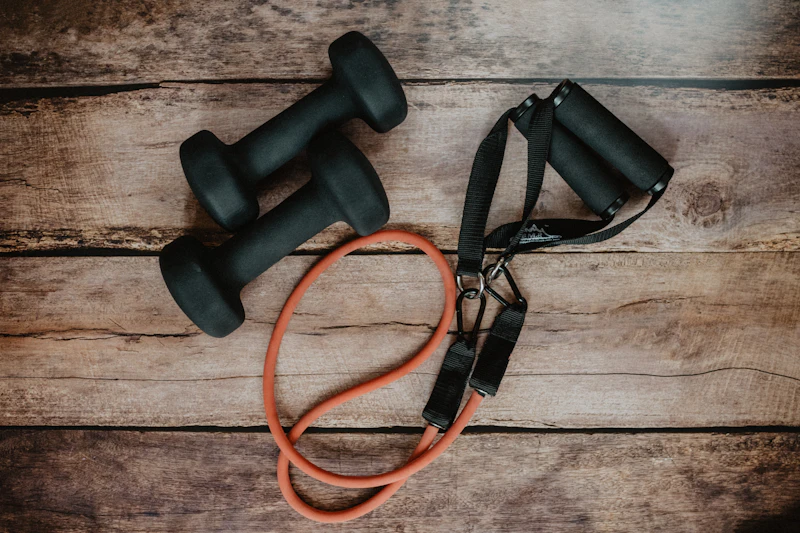
Nor does strength have to mean a gym membership. Loaded carries with shopping bags, push-ups against a kitchen counter, a resistance band looped around a door handle — the evidence does not care what the load is, only that your muscles regularly meet one that challenges them, and that the challenge gradually grows.
- Do resistance training at least twice a week. Full-body sessions covering a squat, a hinge, a push and a pull pattern are enough; free weights, machines, bands and bodyweight all count.
- Let your hands do their share. Rows, deadlifts, farmer carries and dead hangs load the grip naturally — save lifting straps for your heaviest sets rather than using them on every set.
- Support the muscle with protein. Strength work only pays off if the raw material is there; anchor a solid portion of protein at each meal, especially as you get older.
- Test quarterly, best of three. Use an inexpensive hand dynamometer, take three maximal squeezes per hand with short rests, and record the best value — same device, same posture, same time of day.
- Track the trend, not the day. A quarterly measurement kept up over years becomes a personal aging curve you can act on; single readings wobble with sleep, stress and enthusiasm.
- Start below your limit. If you are new to lifting, begin with a structured beginner plan, leave a couple of repetitions in reserve, and progress gradually — consistency compounds faster than intensity.
Where Lamplit Fits In
The hard part of strength training is not the science — it is doing it, twice a week, for years. That is the part Lamplit is built for. Logging a workout is free and takes seconds: exercise, duration, intensity, done. Streaks and badges make consistency visible, and your journal and mood entries sit next to your training, so you can see what a strength habit actually gives back in energy and outlook. If you do not want to design your own program, the app also offers guided training sessions and ready-made plans, so “what do I do in the gym?” stops being the reason to skip a week.
Lamplit will not measure your grip — that is a job for a dynamometer — but it keeps the habit that moves the number. With Lamplit Pro, workouts recorded on your phone or watch sync in automatically via Apple Health or Health Connect, and body-composition measurements sync alongside them, so your muscle story builds itself in the background while you just train. Free manual logging covers everything else. The point is a long, honest record of whether you are training — because that record, not any single test, is what your grip strength in twenty years will reflect.
Honest Caveats
All of the headline evidence here is observational. Weaker grip is associated with worse outcomes; that is not the same as a weak grip causing them, and some of the arrow certainly points the other way — early, undiagnosed illness can lower strength long before it shows anywhere else. Grip is a screening signal, not a diagnosis, and no home test or app changes that. Hand arthritis or an old injury can make the test meaningless for you, and medications or acute illness can move readings. If your strength is declining quickly, or weakness arrives together with fatigue, weight loss or other symptoms, that is a conversation for a clinician. And if you have a heart condition or are returning to exercise after a long break, it is worth checking in with one before starting an ambitious training plan.
The Bottom Line
Grip strength is the rare biomarker that is at once cheap to measure, deeply validated and directly trainable. Across millions of adults, a stronger grip goes hand in hand with lower risks of cardiovascular disease and earlier death — because it reflects the muscle mass and neuromuscular function your future depends on. Test it quarterly if you like numbers. But whether or not you ever buy a dynamometer, the prescription is the same: lift something at least twice a week, eat enough protein, carry your own groceries — and let the trend take care of itself.
Frequently asked questions
What is a good grip strength for my age?
Published reference tables by age and sex exist, and clinicians use cut-offs derived from them to flag low strength, sarcopenia and frailty. But devices and protocols differ, so a single comparison against a chart is less informative than your own trend. Measure quarterly under the same conditions and act on the direction of change.
How do I measure grip strength at home?
Use an inexpensive hand dynamometer. Keep the setup identical each time: same position, elbow at your side, three maximal squeezes per hand with short rests, and record the best value for each hand. Repeat every three months under the same conditions so the readings form a comparable trend.
Can I improve my grip strength, and does it actually matter?
Yes. Grip strength is a proxy for whole-body muscle and neuromuscular function, so the effective intervention is full-body resistance training at least twice a week, supported by adequate protein. Movements like rows, deadlifts, carries and hangs build real grip along the way — and the muscle they build is strongly associated with better long-term health.
Does a low grip strength mean I will get sick?
No. The evidence is observational: a weaker grip marks statistically higher risk at the population level, not a verdict for any individual, and illness can lower strength rather than the other way around. If weakness is new, rapid, or comes with fatigue, weight loss or other symptoms, talk to a clinician.
Related Articles

Fitness and Longevity: How Much Exercise You Really Need to Live Longer
Physical activity is the closest thing we have to a longevity drug — and the effective dose is more achievable than you think. Here's what the evidence says about aerobic work, strength, and steps, and how to build a routine that actually lasts.

Protein and Longevity: How Much You Really Need, and When
The official protein recommendation was set to prevent deficiency, not to defend your muscle as you age. Here is what the research supports instead: higher daily targets, real doses per meal, and why distribution across the day beats a protein-heavy dinner.

VO2max Explained: Why Your Aerobic Fitness Predicts How Long You'll Live
VO2max is the single best measure of cardiorespiratory fitness — and one of the strongest predictors of longevity ever measured. Here's what it means, why it matters so much, and the training that reliably raises it at any age.
Lamplit Team
We're a team of wellness enthusiasts, developers, and researchers building tools to help people live healthier, more intentional lives. Every article we write is grounded in peer-reviewed scientific research.