
Resting Heart Rate: What Your Simplest Metric Reveals About Your Health
Every wearable measures it, and few numbers say more: resting heart rate tracks fitness, recovery, stress and long-term health risk. Here’s what large studies show, what counts as normal, and how to lower yours the honest way.
Your wearable computes dozens of numbers every night, but the most informative one may also be the oldest and the simplest: your resting heart rate. How many times your heart beats in a minute while you are doing nothing at all is a measurement physicians have taken for centuries, every popular wearable records it automatically, and it quietly tracks an unusual amount of your physiology — aerobic fitness, recovery, stress, oncoming illness, and even long-term health risk.
This article unpacks what that one number actually reflects, what large studies say about its link to lifespan, what counts as “normal,” how to read the day-to-day wiggles without panicking, and what genuinely lowers it over time. The short version: your own baseline, watched over weeks, is worth far more than any comparison with someone else’s number.

Why One Number Carries So Much Signal
Your heart rate at rest is the outcome of a negotiation. Left entirely to itself, the heart’s internal pacemaker would fire at roughly 100 beats per minute; the autonomic nervous system then adjusts that pace from moment to moment. The parasympathetic branch — chiefly the vagus nerve — acts as a brake and slows the heart down; the sympathetic branch acts as an accelerator and speeds it up. A low resting heart rate in a healthy person usually means the brake is strong: a calm, well-recovered nervous system with plenty of vagal tone.
The second ingredient is mechanical. A heart strengthened by endurance training pumps more blood with each contraction — a larger stroke volume — so it simply needs fewer beats to supply the body at rest. Put together, resting heart rate becomes a compact read-out of two things worth caring about: the balance of your nervous system and the efficiency of your heart. That is why cardiology has long treated it not as trivia but as a genuine risk marker in its own right.
Fox, K. et al. (2007). “Resting Heart Rate in Cardiovascular Disease.” Journal of the American College of Cardiology, 50(9), 823–830.
The Long Game: Resting Heart Rate and Longevity
The most striking evidence comes from cohorts followed for decades. In the Copenhagen Male Study, researchers tracked middle-aged men over a 16-year follow-up and found that a higher resting heart rate was associated with higher all-cause mortality in a graded fashion — the higher the resting rate, the higher the risk. Crucially, the association held even after adjusting for physical fitness, which means resting heart rate is not merely a proxy for being out of shape: it carried independent information about long-term risk.
Jensen, M.T. et al. (2013). “Elevated resting heart rate, physical fitness and all-cause mortality: a 16-year follow-up in the Copenhagen Male Study.” Heart, 99(12), 882–887.
Single cohorts can mislead, so it matters that the pattern replicates. A meta-analysis pooling general-population studies estimated that the risk of death from any cause rises by roughly 9% for every 10 beats per minute of additional resting heart rate, with cardiovascular mortality showing a similar gradient. That is a remarkably consistent dose–response relationship for a number you can read off your wrist.
Zhang, D., Shen, X. & Qi, X. (2016). “Resting heart rate and all-cause and cardiovascular mortality in the general population: a meta-analysis.” CMAJ, 188(3), E53–E63.
One honest caveat before going further: this is observational evidence. It shows association, not proof that lowering your heart rate by itself extends life. An elevated resting rate is partly a messenger — of low fitness, chronic stress, poor sleep, or illness brewing underneath. But the messenger is consistent, the gradient is graded, and the things that lower it are the same things that improve health by every other measure. That makes it a signal worth watching.
What Counts as Normal — and Why Your Baseline Beats the Chart
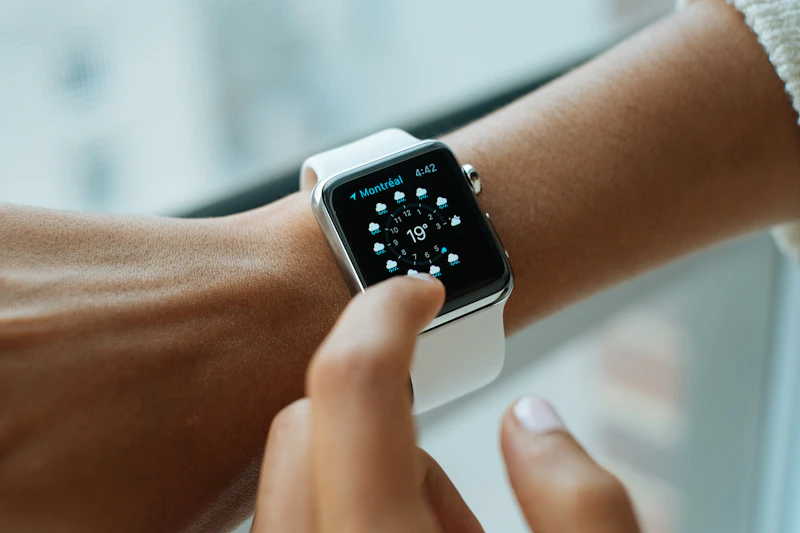
The textbook range for adults is 60–100 beats per minute, but that range describes the boundaries of “not clinically alarming,” not the middle of health. Most healthy adults sit somewhere around 55–75 at true rest. Endurance-trained people commonly sit in the 40s or low 50s — the combined result of a large stroke volume and strong vagal tone — and in a fit person without symptoms, a low resting rate is generally a good sign rather than a worry.
The best modern picture of “normal” comes from wearables themselves. A retrospective study of 92,457 adults wearing consumer devices found wide variation in daily resting heart rate between people — shaped by age, sex, body mass index, sleep, and even the time of year — while each individual’s own baseline stayed remarkably stable over time. Two equally healthy people can sit 20 beats apart; the same person rarely drifts far without a reason.
Quer, G. et al. (2020). “Inter- and intraindividual variability in daily resting heart rate and its associations with age, sex, sleep, BMI, and time of year: Retrospective, longitudinal cohort study of 92,457 adults.” PLoS ONE, 15(2), e0227709.
The practical conclusion follows directly: comparing your resting heart rate with a friend’s is close to meaningless, and comparing it with your own last month is where the information lives. Establish your personal baseline, then read everything else against it.
Reading the Day-to-Day Wiggles
Once you know your baseline, the daily deviations become legible. A resting rate a few beats above your normal this morning usually has a mundane explanation: a hard training session yesterday, alcohol in the evening, a short or fragmented night of sleep, a hot bedroom, a stressful week — or an infection getting started, which often nudges the number up before you feel properly sick. None of these calls for alarm; they call for context.
The rules of thumb are simple. A single elevated reading is noise — ignore it. Several days running above your baseline are a message — ease the training intensity, sleep more, and let the number settle. And a slow drift downwards over weeks and months is one of the most motivating signals in all of self-tracking: it usually means your aerobic fitness is genuinely improving, beat by beat.
What Actually Lowers It
Resting heart rate is modifiable, and the best-evidenced lever is exactly what the physiology predicts: aerobic exercise. A systematic review and meta-analysis of interventional studies found that endurance training reliably reduces resting heart rate — and, interestingly, that yoga performed well too, consistent with its effect on the nervous-system side of the equation rather than the stroke-volume side.
Reimers, A.K., Knapp, G. & Reimers, C.D. (2018). “Effects of Exercise on the Resting Heart Rate: A Systematic Review and Meta-Analysis of Interventional Studies.” Journal of Clinical Medicine, 7(12), 503.
Expect a realistic timeline: weeks to months, not days. A handful of beats per minute is a normal response to a consistent training block, and in the light of the population evidence above, a handful of beats is not a small change. The levers worth pulling:
- Build an aerobic base. Aim for at least 150 minutes a week of moderate endurance work — brisk walking, cycling, jogging, rowing, swimming. Consistency over months beats occasional heroics.
- Add a practice that downshifts the nervous system. Yoga has interventional evidence behind it; slow breathing and meditation work the same parasympathetic territory.
- Protect your sleep. Short or broken nights show up as a higher resting rate the next morning; chronically short sleep keeps it elevated.
- Watch the alcohol. Even moderate evening drinking raises overnight heart rate — it is often the clearest single-cause spike you will ever see in your own data.
- Stay hydrated, especially in heat. A dehydrated body maintains blood pressure by beating faster; hot weather does the same. Correct for both before reading meaning into a high day.
- Manage the stress load. Sustained psychological stress keeps the sympathetic accelerator half-pressed. Anything that genuinely relaxes you — walks, nature, time off-screen — counts as training here.
How to Measure It Well
Measurement discipline matters more than measurement gear. The cleanest signal is an overnight or waking average from a wearable, because sleep standardizes the conditions automatically — no coffee, no stairs, no meetings. If your watch reports a nightly resting heart rate, that is the number to trend. Measuring by hand works too: same time every morning, before caffeine, seated and still for a few minutes first.
Then judge the trend, not the day. Compare weekly averages against your baseline, keep reading the same device (absolute values differ between devices, so cross-device comparisons mislead), and note the context — training, alcohol, illness, heat — next to the number. A reading without context is trivia; a reading beside your life is information.
Where Lamplit Fits In
Resting heart rate only becomes useful next to the things that move it — and that is exactly what Lamplit is built for. You can log your workouts, sleep, nutrition, and how you actually feel — journal and mood — in one timeline, for free, on iOS, Android, and the web. When your resting rate runs high for a few days, the explanation is usually already sitting in that timeline: the late night, the wine, the double training day, the brutal week at work.
With Lamplit Pro, the resting heart rate your watch records overnight syncs in automatically via Apple Health on iOS or Health Connect on Android, alongside biomarkers like HRV and VO₂max — no manual copying. Once it is there, it does two jobs in the free scores on your Today screen: it is one of the four inputs to Readiness, compared only with your own baseline, and one of the nine measured inputs to Lamplit Age, scored with the Zhang meta-analysis cited above. Both show exactly what built them, and the full method is public at lamplit.ai/methodology. Pro also adds a weekly AI recap that summarizes how your week actually went, and on the Max plan, Genie — Lamplit’s AI coach — looks across domains and surfaces patterns that are true for you, like a resting rate that climbs in the weeks your sleep slips. Every account, free included, gets a Genie conversation each month to ask what a trend might mean.
Caveats and Red Flags

A wearable estimates and screens; it does not diagnose. Medication is the most common confounder: beta-blockers lower heart rate substantially, which makes population comparisons meaningless and makes your own baseline the only usable reference. Stimulants, some thyroid conditions, fever, anemia, and pregnancy all shift resting heart rate as well — more reasons to interpret the number inside your own context rather than against a chart.
And some findings deserve a professional rather than a protocol: a resting heart rate that stays above 100 beats per minute at genuine rest, new palpitations or a sense of skipped or racing beats, dizziness or fainting, or a very low rate accompanied by light-headedness or unusual fatigue. None of these are things to self-manage with training advice from the internet — they are exactly what clinicians are for, and a log of your recent readings will make that conversation far more productive.
The Bottom Line
Resting heart rate is the rare metric that is free, effortless to measure, and genuinely meaningful: lower rates track with better fitness and, across large cohorts, with longer life — roughly 9% more all-cause mortality risk per 10 beats per minute in the meta-analytic picture. Ranges vary widely between healthy people, so your own baseline is the reference that matters. Read single days with suspicion, read multi-week trends with interest, lower it the honest way — aerobic training, sleep, less alcohol, less stress — and let a doctor look at anything sustained or symptomatic.
Frequently asked questions
What is a normal resting heart rate?
The textbook adult range is 60 to 100 beats per minute, but most healthy adults sit around 55 to 75 at true rest, and endurance-trained people are often in the 40s or low 50s. Baselines vary widely between healthy individuals, so your own stable average matters more than any chart.
Why does a lower resting heart rate matter for longevity?
In large observational studies, higher resting heart rates are associated with higher all-cause and cardiovascular mortality — roughly 9% more risk per additional 10 beats per minute in a meta-analysis. That is an association rather than proof of causation, but the gradient is consistent, and the habits that lower resting heart rate improve health by every other measure too.
What can raise my resting heart rate from one day to the next?
Common causes are a hard training session, evening alcohol, short or broken sleep, heat, dehydration, psychological stress and an oncoming infection. A single elevated reading is noise; several days above your personal baseline are a signal to recover, and a persistent unexplained change is worth discussing with a doctor.
How can I lower my resting heart rate?
Aerobic training is the best-evidenced lever — interventional studies show endurance training reliably lowers resting heart rate, and yoga also helps. Support it with good sleep, less alcohol, hydration and stress management, and expect the change to take weeks to months rather than days.
Related Articles

Heart Rate Variability: What HRV Really Measures — and How to Improve It
HRV has become the most talked-about metric in recovery and longevity — and one of the most misunderstood. Here's what it actually measures, why it's linked to healthspan, what a 'good' number really means, and the evidence-based ways to raise it.

Heart Rate Recovery: The One-Minute Test That Predicts Long-Term Health
How many beats your heart rate falls in the first minute after exercise is one of the best-validated predictors of long-term health — and you can measure it with nothing more than a watch. Here is what the evidence shows, what counts as a good number, and how to test and improve your own.

VO2max Explained: Why Your Aerobic Fitness Predicts How Long You'll Live
VO2max is the single best measure of cardiorespiratory fitness — and one of the strongest predictors of longevity ever measured. Here's what it means, why it matters so much, and the training that reliably raises it at any age.
Lamplit Team
We're a team of wellness enthusiasts, developers, and researchers building tools to help people live healthier, more intentional lives. Every article we write is grounded in peer-reviewed scientific research.