
Cold Water Immersion: What Ice Baths Do (and Don't Do) for Recovery
Ice baths genuinely ease soreness and lift mood — but taken straight after lifting they can blunt the very gains you're training for. What the evidence supports, the timing rule every lifter should know, and how to test your own response.
The ice bath has gone from locker-room oddity to the centrepiece of recovery culture: backyard tubs, dedicated timers, group plunges at sunrise. Strip away the ritual, though, and the scientific record is smaller and more interesting than the enthusiasm suggests. Cold water immersion genuinely does a few things well — it eases soreness and delivers a real, measurable jolt of alertness — and it does one thing many of the people using it would actively not want: taken at the wrong time, it can blunt the very adaptations you are training for.
This article separates the demonstrated from the hoped-for. You will find what controlled trials actually show about soreness and recovery, why the hours after strength training are the wrong time to get cold, what winter-swimmer studies do and do not prove about metabolism, and the safety rules that are not optional. And because individual responses vary widely — and enthusiasm is itself a powerful drug — you will also find a simple way to test what cold water does for you, rather than for the average plunger.

What Cold Water Reliably Does
Start with the strongest claim: cold water immersion reduces muscle soreness after hard exercise. A Cochrane systematic review pooled the available randomized trials and found that immersion after exercise produced modest reductions in delayed-onset muscle soreness (DOMS) compared with passive rest. The effect is not dramatic, and many of the underlying trials were small — but the direction is consistent: legs that were plunged feel better over the next day or two than legs that were not.
Bleakley, C. et al. (2012). “Cold-water immersion (cryotherapy) for preventing and treating muscle soreness after exercise.” Cochrane Database of Systematic Reviews, (2), CD008262.
The second reliable effect needs no meta-analysis to notice. Cold water triggers a strong sympathetic stress response: heart rate and breathing jump, and levels of catecholamines such as noradrenaline rise sharply. That is the neurochemistry behind the wide-awake, mildly euphoric buzz plungers describe — a real, repeatable physiological response, not imagination. For many people it is the honest core of the habit: a few minutes of controlled discomfort that reframes the rest of the morning.
Notice what the two effects share: they are about how you feel in the hours and days around the plunge. That matters — subjective recovery is a legitimate outcome, and feeling fresher tomorrow can be exactly what you need after a race. But it is a different claim from “cold water makes you healthier or fitter,” and that distinction runs through everything that follows.
The Lifter’s Catch: Icing Away Your Gains

Here is the finding that should change more routines than anything else in this article. Muscle does not grow during training; it grows in the recovery window afterwards, and part of the growth signal is precisely the inflammation and stress signalling that a cold plunge is designed to suppress. Ice that signal away, session after session, and you ice away some of the adaptation.
This is not a theoretical worry. In a twelve-week strength-training study, participants who followed their sessions with cold water immersion gained less muscle mass and less strength than those who cooled down actively — and the acute anabolic signalling in their muscle was blunted as well. The inflammation you are plunging away is not a bug of hard training; it is part of the message that tells muscle to rebuild bigger.
Roberts, L.A. et al. (2015). “Post-exercise cold water immersion attenuates acute anabolic signalling and long-term adaptations in muscle to strength training.” The Journal of Physiology, 593(18), 4285–4301.
The practical rule falls straight out of the physiology: keep cold water away from the hours after resistance training whenever size or strength is the goal. Plunge on rest days, after easy endurance work, or long before you lift. The exception cuts the other way: after an endurance competition, or between back-to-back event days, adaptation is not the point — feeling fresh tomorrow is — and that is exactly the scenario where the soreness evidence supports getting cold. The nuance matters: the blunting evidence concerns regular cold immersion right after lifting — an occasional plunge on a rest day is a different dose entirely.
Winter Swimmers, Brown Fat and the Metabolism Story
The boldest claims for cold exposure are metabolic: that regular plunging activates brown fat — the heat-generating tissue that burns calories to keep you warm — and thereby transforms your metabolism. There is genuine biology here. A study of young, healthy men who habitually swim through winter found altered brown-fat thermoregulation and greater cold-induced thermogenesis compared with control participants: their bodies had, in measurable ways, adapted to the cold.
Søberg, S. et al. (2021). “Altered brown fat thermoregulation and enhanced cold-induced thermogenesis in young, healthy, winter-swimming men.” Cell Reports Medicine, 2(10), 100408.
Read the fine print before rearranging your life around it, though. This is a small study of an unusual, self-selected group; it demonstrates habituation, not health outcomes; and nobody has shown that plunging meaningfully changes body composition or long-term metabolic risk in ordinary people. The honest summary is interesting biology, unproven benefit — a reason for scientific curiosity, not a weight-loss plan.
The Honest Big Picture
Zoom out to the full sweep of claimed benefits — immunity, mood disorders, circulation, longevity — and the evidence thins quickly. A wide-ranging review in Experimental Physiology, pointedly titled “kill or cure?”, concluded that the same exposure that may offer benefits also carries genuine dangers, and that many popular claims run far ahead of the data.
Tipton, M.J. et al. (2017). “Cold water immersion: kill or cure?” Experimental Physiology, 102(11), 1335–1355.
A more recent review of the health effects of voluntary cold-water exposure reached a similar verdict: much of the supporting research is small, often uncontrolled, and frequently conducted in committed enthusiasts — people who differ from the general population in fitness, habits, and sheer self-selection — which makes it hard to untangle what the cold itself contributes.
Esperland, D., de Weerd, L. & Mercer, J.B. (2022). “Health effects of voluntary exposure to cold water — a continuing subject of debate.” International Journal of Circumpolar Health, 81(1), 2111789.
None of this means cold water does nothing. It means the demonstrated effects — less soreness, better mood, a felt sense of recovery — are narrower than the marketing. Those are still worthwhile effects. They are simply not a health transformation.
Safety Is Non-Negotiable
Cold water is a genuine physiological stressor, and its dangers are front-loaded. Sudden immersion triggers the cold-shock response: an involuntary gasp, rapid uncontrollable breathing, and a sharp spike in heart rate and blood pressure, all within the first minutes. In open water, a gasp taken with your face below the surface can drown a strong swimmer — the same literature that weighs immersion’s benefits also documents its role in drowning deaths.
The rules that manage this risk are simple and absolute. Never plunge alone, especially in open water. Enter gradually, feet first, and get your breathing under control before you go deeper — never dive or jump into cold water. Keep sessions short and get out while you are still fully in control, then rewarm gradually. And because cold immersion abruptly raises blood pressure and the heart’s workload, anyone with a heart condition, high blood pressure, or any cardiovascular concern should talk to a doctor before starting — this is not a formality. Skip it entirely after alcohol. And treat open water with double respect: currents, depth, and the continued fall in core temperature after you exit — the so-called afterdrop — all add risks that a tub at home does not have.
A Sensible Protocol (If You Want One)
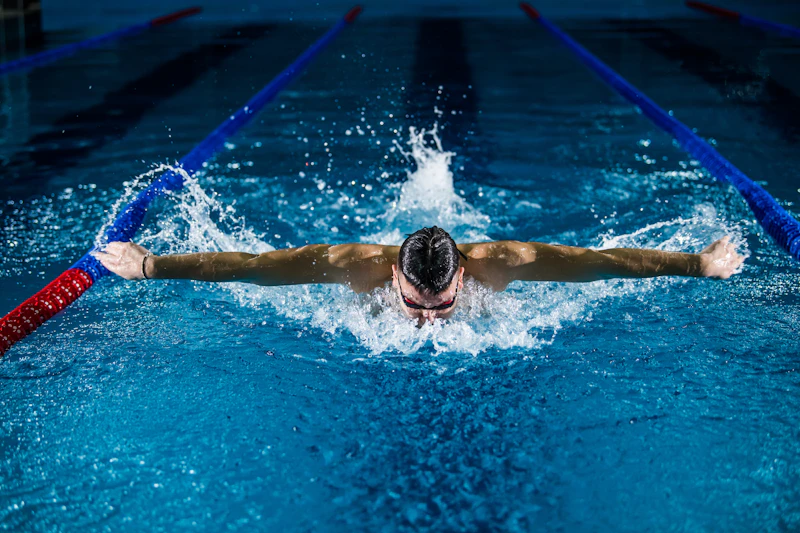
If, knowing all this, you still want cold water in your week — a defensible choice for the mood and soreness effects alone — the protocol does not need to be extreme.
- Keep the dose moderate. Water around 10–15 °C (50–59 °F) for 5–10 minutes is where most of the recovery research sits. Colder and longer is not better — it is only riskier.
- Time it around your training goal. Plunge after endurance sessions or on rest days. If muscle size or strength is the goal, keep cold out of the hours after lifting.
- Enter gradually and stay in control. Feet first, breathing steadied before you submerge further; get out while you can still move and speak normally.
- Never go alone. Have company, an easy exit, and warm, dry layers waiting — non-negotiable in open water.
- Try the cold-shower finish first. A brief cold finish to a normal shower is the low-friction version: the evidence behind it is weaker, but the mood kick is similar and the risk is far lower.
- Track your own response. Log plunge days and watch your sleep, morning mood, soreness, and heart rate variability against your baseline — this is exactly where individual variation and placebo live.
Where Lamplit Fits In
Cold plunging is the textbook case of an intervention where enthusiasm outruns evidence — which makes it the perfect subject for an n-of-1 experiment, and that is exactly what Lamplit is built for. Log your workouts, sleep, and mood in the app for free, and add a one-line journal note on the days you plunge. After a couple of weeks you can put the two side by side: do plunge days precede better sleep? A calmer morning mood? Less soreness after hard sessions? Your own trend answers the question the studies cannot — whether this works for you. A clean first pass is two weeks with plunges and two weeks without, training held steady, comparing the two blocks.
If you wear an Apple Watch or an Android wearable, Lamplit Pro syncs your overnight heart rate variability and resting heart rate automatically via Apple Health or Health Connect, so the physiological side of the comparison fills itself in. And on the Max plan, Genie — Lamplit’s AI coach — reads across your domains and surfaces the pattern for you: whether recovery, mood, and soreness actually move with your cold exposure, or whether the plunge is a ritual you enjoy that your data is indifferent to. Both answers are useful. Only your own data can tell you which one is yours.
Important Caveats
Beyond safety, respect what the research cannot yet say. Cold-water studies are mostly small, short, and impossible to blind — nobody mistakes an ice bath for a placebo — so subjective outcomes like mood and soreness are especially vulnerable to expectation. Most participants have been young and healthy, often male, so results generalize poorly to everyone else. And nothing here is medical treatment: cold water is not a therapy for depression, immunity, or any diagnosed condition, and anyone with a medical concern should talk to a clinician before starting. If you plunge, do it for the demonstrated, modest benefits — and let your own tracked response decide whether it earns a place in your routine.
The Bottom Line
Cold water immersion is neither miracle nor myth. It modestly eases soreness, reliably lifts alertness and mood, and can help you feel fresh between hard endurance days — effects worth having. It also blunts muscle and strength adaptations when it follows lifting, its metabolic promise rests on small studies of unusual people, and it carries real, front-loaded risks that demand respect. Use it deliberately: right timing, moderate dose, never alone — and let your own data, not the hype, decide how much cold your routine deserves.
Frequently asked questions
Do ice baths actually reduce muscle soreness?
Yes, modestly. A Cochrane review of randomized trials found that cold water immersion after exercise reduces delayed-onset muscle soreness compared with resting passively. The effect is real but not dramatic, and it shows up mainly in how your muscles feel over the next day or two.
Should I take an ice bath after lifting weights?
Not if building muscle or strength is your goal. A twelve-week study found that regular cold water immersion after strength sessions blunted long-term gains in muscle mass and strength, because post-exercise inflammation is part of the growth signal. Keep cold plunges to rest days, after endurance work, or well away from your lifting sessions.
What temperature and duration should a cold plunge be?
Most recovery research uses water around 10–15 °C for roughly 5–10 minutes. Colder and longer is not better — it only raises the risk. Enter gradually, keep sessions short, and get out while you are still fully in control.
Is cold water immersion safe for everyone?
No. Sudden immersion triggers the cold-shock response — an involuntary gasp, rapid breathing and a spike in heart rate and blood pressure — which is especially dangerous in open water. Never plunge alone, and if you have a heart condition, high blood pressure or any medical concern, talk to a doctor before starting.
Related Articles

Overtraining or Under-Recovering? The Warning Signs in Your Data
Most “overtraining” in regular exercisers is really under-recovery. Learn to read the warning signs in your training, heart rate, sleep and mood data — and how to fix them before a dip becomes months on the sidelines.

The Science of Meditation: What It Really Does for Stress, Sleep, and the Brain
After decades of scientific scrutiny, meditation earned a real if nuanced verdict: strong evidence for stress, anxiety, and sleep, and none of the side effects. Here's what it does to your brain, what's oversold, and how to start a practice that lasts.
Lamplit Team
We're a team of wellness enthusiasts, developers, and researchers building tools to help people live healthier, more intentional lives. Every article we write is grounded in peer-reviewed scientific research.