
Sleep and Vaccine Response: Getting the Most From Your Flu Shot
Short sleep around a vaccination is linked to fewer antibodies. What the research on sleep and vaccine response found, whether morning shots help, and how to plan the nights around your flu shot.
If you have a flu shot booked for this month, the appointment will take about five minutes. What your immune system does with it takes weeks, and researchers who study sleep and vaccine response have found that part of that work seems to go better when you’ve been sleeping well. In one of the first experiments on this, young men kept to four hours in bed a night had less than half the flu antibodies of normal sleepers ten days after the shot.
So does sleep affect how well a vaccine works? It can. A 2023 meta-analysis found that short sleep in the days around a vaccination is linked to a weaker antibody response, an effect that was clear in men and less certain in women. That’s no reason to skip or delay your shot. It’s a reason to give yourself a few good nights on either side of it.
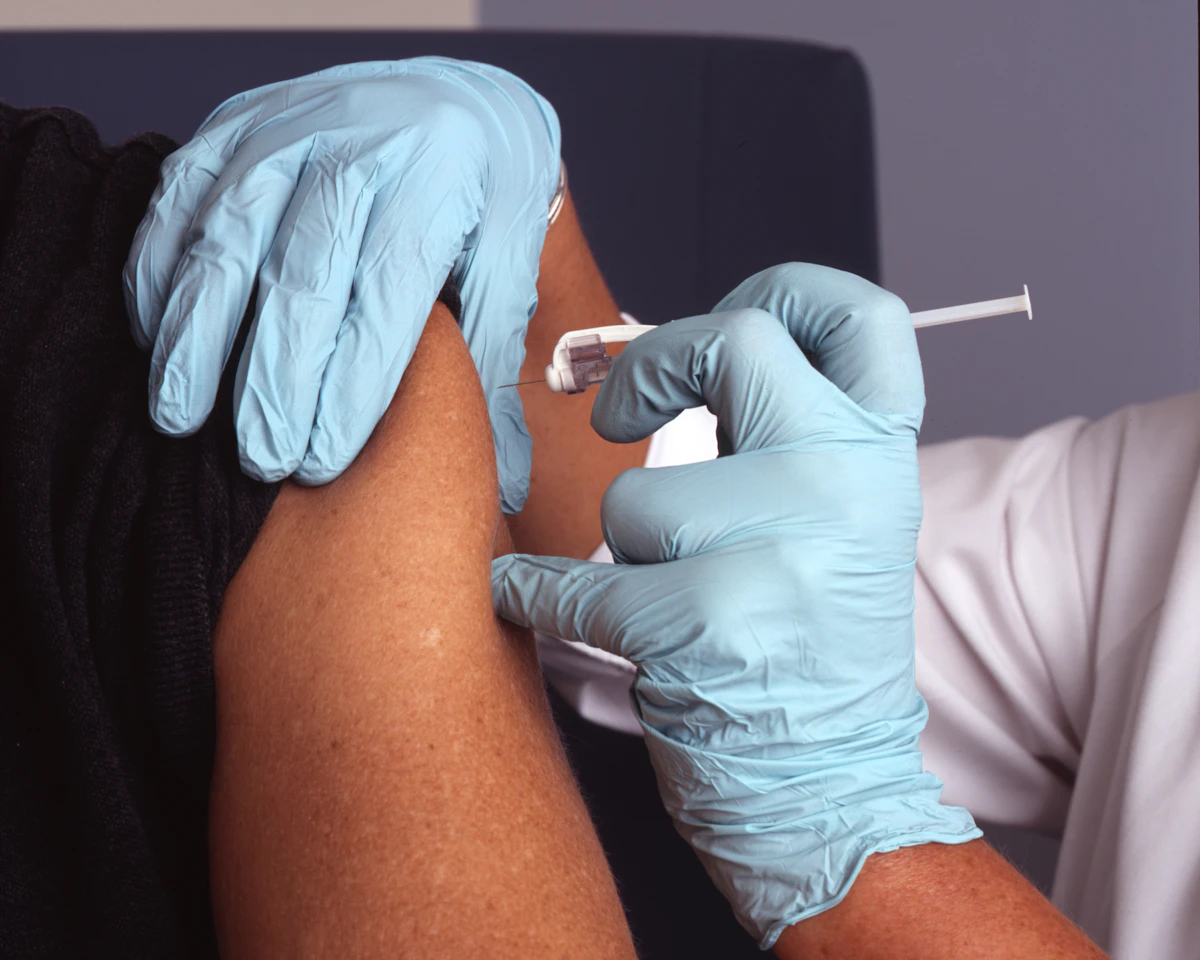
Four Hours a Night Around a Flu Shot
That early experiment was published in JAMA in 2002. The volunteers were 25 healthy young men with an average age of 23, all in the habit of spending 7.5 to 8.5 hours in bed, and none of them had had a flu shot in the previous three years. Eleven were limited to four hours in bed a night, from four nights before the shot until two nights after it, while the rest kept their usual schedules. Ten days after the shot, the normal sleepers had more than twice the antibody levels of the restricted group.
The gap didn’t last. By four weeks, the two groups no longer differed significantly, which suggests the sleep loss mainly slowed the early response. The study was small, included only young men, and used a degree of sleep loss most people only reach in a very hard week. Still, the first weeks after a flu shot are the ones that count if the virus is already going around.
Spiegel, K. et al. (2002). “Effect of sleep deprivation on response to immunization.” JAMA, 288(12), 1471-1472.
Sleep and Vaccine Response Outside the Lab
Few people sleep four hours a night on purpose, so a study in Pittsburgh looked at ordinary sleep at home. In all, 125 healthy adults aged 40 to 60 received the standard three doses of hepatitis B vaccine over six months, and a subgroup wore wrist activity monitors for the three nights before and the three nights after the first dose. Each extra hour of sleep went with 56% higher antibody levels after the second dose. Six months after the last dose, 18 of 123 people had not reached the level considered protective, and those who had averaged under six hours a night were much less likely to be protected than those who slept more than seven. The study was observational, and only 88 people had usable monitor data, so that last estimate is imprecise.
Prather, A.A. et al. (2012). “Sleep and antibody response to hepatitis B vaccination.” Sleep, 35(8), 1063-1069.
In 2023, a team that included the lead authors of both studies above pooled seven studies of flu, hepatitis A and hepatitis B vaccines in healthy adults, with extra data supplied by the original research groups. Where sleep had been measured objectively, in a lab or with a wrist monitor, short sleep around vaccination went with a clearly weaker antibody response (304 people aged 18 to 60). Where people had only reported their own sleep, with short meaning under six hours a night, the link was weaker and not statistically significant (504 people aged 18 to 85). The effect was large in men. In women the estimate was smaller and too uncertain to call, and the authors count the reasons for that difference among the questions larger studies still need to answer, along with which nights matter most and how much sleep is enough.
Spiegel, K. et al. (2023). “A meta-analysis of the associations between insufficient sleep duration and antibody response to vaccination.” Current Biology, 33(5), 998-1005.e2.
Is There a Best Time of Day for a Flu Shot?
The hour of your appointment may matter too, at least later in life. In a British trial, 24 family practices in the West Midlands were randomly assigned to give flu shots either between 9 and 11 in the morning or between 3 and 5 in the afternoon, and 276 people aged 65 or over took part across three flu seasons. A month later, antibody levels had risen more in the morning group for two of the three flu strains in the vaccine, in men and women alike. A correction published later that year reran the numbers with further cluster analyses, and after that only one strain, H1N1, remained significant, with a trend for a second. The trial included only older adults, and it measured antibodies rather than who actually caught flu.
Long, J.E. et al. (2016). “Morning vaccination enhances antibody response over afternoon vaccination: A cluster-randomised trial.” Vaccine, 34(24), 2679-2685.
So a morning slot is a reasonable tiebreaker if one is easy to get. It isn’t a reason to wait for one, or to cancel an afternoon appointment you already have.
A Short Night Is No Reason to Skip Your Shot
None of this means a vaccine given after a bad night is wasted. These studies found weaker responses on average, not vaccines that stopped working, and in the 2002 flu study the gap had closed by four weeks. Putting the shot off, on the other hand, leaves you without its protection for longer, often just as flu cases start to climb. So keep the appointment even if you slept badly the night before, and put your effort into the nights that follow.
If you’re ill with a fever on the day, ask the pharmacist or nurse whether to go ahead. And if you regularly sleep less than six hours because you can’t, rather than because you don’t make the time, that’s worth raising with your doctor, flu season or not.
How to Plan the Nights Around Your Appointment
No one knows yet exactly which nights matter most, but the flu and hepatitis B studies above both covered several nights on either side of the shot. A sensible target is at least seven hours of sleep, the amount generally recommended for adults, on the two nights before your appointment and the two after it.
Try this today: look up the date of your shot, or book one, and count back from your alarm. If you get up at 6:30, aim to have the lights out by 11 on those four nights. Keep the evening after the shot quiet and go easy on alcohol, which tends to break up sleep in the second half of the night. If your arm aches or you feel a little off the next day, both common after a flu shot, an early night makes sense anyway.
To see whether you actually got those nights, use the free sleep log in Lamplit. Each morning, set your “Bed” and “Wake” times, and the log shows your “Time in bed” against your goal. Pick a quality between “Poor” and “Excellent” and add the “Alcohol” factor if you drank the evening before, then press “Log Sleep” to save the night. On the morning after your appointment, write “flu shot” in “Notes (optional)” before saving. The app can’t tell you how many antibodies you made, but a week of entries will show whether you gave the vaccine the sleep you planned to.
Log last night’s sleep in Lamplit and keep going through the week of your flu shot. It’s free.
Frequently asked questions
Does lack of sleep affect the flu shot?
It can weaken the response. In a small 2002 experiment, young men limited to four hours in bed a night around a flu shot had less than half the antibody levels of normal sleepers ten days later, although the gap had closed by four weeks. A 2023 meta-analysis of seven vaccine studies linked short sleep around vaccination to fewer antibodies, clearly in men and less certainly in women.
Should I still get vaccinated if I slept badly the night before?
Yes, keep the appointment. Studies linking short sleep to vaccine response found smaller antibody responses on average, not vaccines that stopped working, and postponing leaves you without the vaccine’s protection for longer during flu season. Aim for at least seven hours of sleep on the nights after the shot, go easy on alcohol that evening, and ask the pharmacist or nurse first if you have a fever on the day.
What is the best time of day to get a flu shot?
Whenever you can get one. A British trial in 276 adults aged 65 and over found that shots given between 9 and 11 a.m. raised antibody levels more than shots given between 3 and 5 p.m. for two of the three flu strains, though a later correction left only one strain clearly ahead. If a morning slot is easy to book, take it; otherwise an afternoon appointment is fine.
Related Articles

Sleep Debt: What It Really Costs and Whether You Can Pay It Back
Two weeks of six-hour nights can impair you as much as a night without sleep — while you rate yourself only mildly tired. What sleep debt really costs, what the weekend lie-in can and can’t repay, and how to settle the balance for real.

Should You Exercise With a Cold? How to Use the Neck Check
Should you exercise with a cold? How the neck check works, what a study that gave volunteers a cold virus found, why a fever means rest and how to get back to training.

Your Wearable Knows You’re Getting Sick Before You Do
In the day or two before symptoms, infections often push resting heart rate and respiratory rate up, skin temperature up, and HRV down. Here’s what the pre-symptomatic detection research really shows — and how to read your own overnight data without panicking.
Lamplit Team
We're a team of wellness enthusiasts, developers, and researchers building tools to help people live healthier, more intentional lives. Every article we write is grounded in peer-reviewed scientific research.