
Precision Wellness: Why Personalized, Cross-Domain Data Beats Generic Health Advice
Health advice is built for an average person who doesn't exist — the same food, workout, or supplement lands differently on every body. Here's the evidence for personalization, why your health domains must be read together, and how to find what works for you.
Almost every piece of health advice you have ever read describes a person who does not exist: the average. Eat this, sleep this much, train this way — each recommendation is the midpoint of a population, and populations are made of individuals who scatter widely around that midpoint. The same breakfast spikes one person’s blood sugar and barely moves another’s. The same workout leaves one person energised and another wrecked. Generic advice is a starting hypothesis, not an answer — and the only way to find your answer is your own data.
This article makes the evidence-based case for personalization: why population averages fail individuals, why your health domains have to be read together rather than in isolation, and how to run simple experiments on yourself to find what actually works for you. It is the shift from generic wellness to precision wellness — and it is mostly a matter of paying attention to the right data.

The Average Person Doesn’t Exist

The clearest demonstration comes from nutrition. In a landmark study, researchers continuously monitored the blood-sugar responses of 800 people to identical meals and found something striking: the responses varied enormously from person to person. A food that sent one participant’s glucose soaring left another’s flat. There was no single “healthy” or “unhealthy” meal that held for everyone — the right food depended on the individual.
Zeevi, D. et al. (2015). “Personalized Nutrition by Prediction of Glycemic Responses.” Cell, 163(5), 1079–1094.
The large PREDICT study replicated and extended this, tracking over a thousand people’s metabolic responses to standardised meals. It found wide variation between people in blood sugar, fat, and insulin responses — and, tellingly, identical twins who share their DNA still responded differently, showing that genetics alone does not determine the answer. Your response is yours, shaped by your microbiome, sleep, activity, and context.
Berry, S.E. et al. (2020). “Human postprandial responses to food and potential for precision nutrition.” Nature Medicine, 26, 964–973.
Most Health Advice Works for a Minority
This is not unique to food. Even in medicine, the average blockbuster drug helps a minority of the people who take it — some analyses put the ratio of people helped as low as one in a handful. The response to almost any intervention is distributed, not uniform. That is exactly why researchers increasingly champion the n-of-1 trial: a rigorous experiment with a sample size of one, testing whether a specific intervention works for a specific person.
Schork, N.J. (2015). “Personalized medicine: Time for one-person trials.” Nature, 520(7549), 609–611.
Applied to wellness, the lesson is liberating: if a popular protocol does nothing for you, the protocol may simply be wrong for you— not evidence that you failed. The generic recommendation tells you where to start looking. Your own data tells you whether you have found it.
Your Body Is a System, Not a Set of Silos
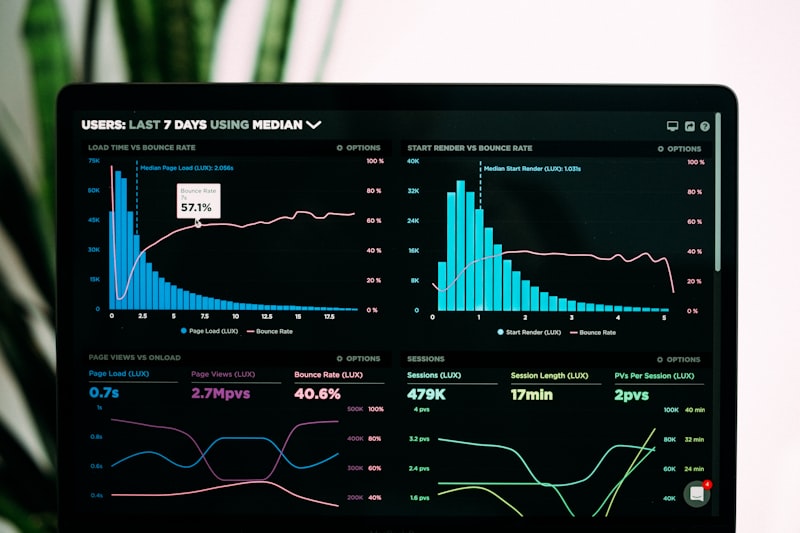
Personalization has a second half that most tracking ignores: your health domains are not independent. Sleep changes your glucose tolerance and appetite the next day. Training load feeds back into your sleep and heart rate variability. Stress ripples into everything. The important signal usually is not inside any single metric — it lives in the relationships betweenthem, and those are invisible if you track each domain in its own app.
Deep-profiling research makes this concrete. When scientists followed a single person with dense, continuous measurement across many biological systems, they revealed dynamic, individual patterns — connections and changes over time that no one-off snapshot could show. The person was a system with its own rhythms, not a row of independent numbers.
Chen, R. et al. (2012). “Personal Omics Profiling Reveals Dynamic Molecular and Medical Phenotypes.” Cell, 148(6), 1293–1307.
This is where artificial intelligence genuinely earns its place in health: finding the faint, personal, cross-domain patterns in a stream of everyday data that a human could never hold in their head at once.
Topol, E.J. (2019). “High-performance medicine: the convergence of human and artificial intelligence.” Nature Medicine, 25, 44–56.
How to Personalize: Run Your Own Experiments
You do not need a lab to practise precision wellness. You need a baseline, one change at a time, and the patience to watch your own trend.
- Track more than one domain at once. Log sleep, mood, energy, training, and nutrition together. The insight is in the overlap, so a single-purpose tracker cannot find it.
- Establish your baseline first.Spend a couple of weeks measuring before you change anything. Without a genuine “before,” you cannot tell whether an intervention did anything.
- Change one variable at a time. Caffeine cut-off, an earlier dinner, a magnesium trial, a new bedtime. Change two things at once and you will never know which one mattered.
- Read the trend, not the day. One night or one reading is noise. Give a change two to four weeks and compare the trend against your baseline before you judge it.
- Keep what works for you — and drop what doesn’t. The goal is not to follow the protocol; it is to end up with a routine your own data says is working, even if it looks nothing like the generic template.
Where Lamplit Connects Your Whole Picture
Most health apps do one thing, which is exactly the problem — they keep your domains in silos. Lamplit is built the other way. You track your whole picture in one place: sleep, workouts, nutrition, fasting, supplements, meditation, lab tests, and cycle, alongside your mood and journal. Because the data lives together, the connections between domains finally become visible instead of being scattered across five separate apps.
On the Max plan, that is where Genie’s cross-domain insights come in. Genie — an AI coach grounded in peer-reviewed research — watches every domain together and surfaces plain-language, cited patterns that are true for you: the late meals that quietly cost you deep sleep, the training weeks that lift your mood, the phase of your cycle where your recovery dips. These are n-of-1 findings about your own body, not population averages — the essence of precision wellness. And because the data is personal, it stays private by design: your entries are yours, and you choose what, if anything, to share.
Important Caveats
Self-experimentation has real limits, and it is worth respecting them. Correlation is not causation — two things moving together may both be driven by a third — and short trials are easily fooled by the placebo effect and by regression to the mean, where an extreme reading naturally drifts back toward normal on its own. Personalization complements population evidence; it does not replace it. The basics that hold for almost everyone — enough sleep, movement, whole foods, not smoking — are still the foundation, and anything involving medication, a diagnosed condition, or a worrying symptom belongs with a clinician, not a self-directed experiment.
The Bottom Line
The average person the guidelines describe does not exist, and the same intervention lands differently on different bodies. Precision wellness is the practical response: track your domains together, establish a baseline, change one thing at a time, and let your own cross-domain trend — not the population average — tell you what works. Generic advice is where you start. Your data is how you finish.
Related Articles

Holistic Health Tracking: Why Monitoring Multiple Life Areas Leads to Better Outcomes
Sleep affects exercise. Exercise affects appetite. Finances affect stress. The research is clear: tracking health in silos misses the connections that matter most.

Heart Rate Variability: What HRV Really Measures — and How to Improve It
HRV has become the most talked-about metric in recovery and longevity — and one of the most misunderstood. Here's what it actually measures, why it's linked to healthspan, what a 'good' number really means, and the evidence-based ways to raise it.

Blood Work for Longevity: The Biomarkers That Actually Predict Your Healthspan
Heart disease and metabolic dysfunction build silently for decades, but they leave early traces in your blood. Here are the biomarkers with the strongest evidence — ApoB, HbA1c, fasting insulin, hs-CRP — and how to turn a one-off result into a trend you act on.
Lamplit Team
We're a team of wellness enthusiasts, developers, and researchers building tools to help people live healthier, more intentional lives. Every article we write is grounded in peer-reviewed scientific research.